
FG Digitises Academic Credential Authentication and Evaluation: Advancing Education Verification
FG Digitises Academic Credential Authentication and Evaluation: Advancing Education Verification

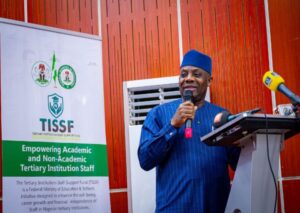
The Federal Government has introduced a major reform aimed at digitising the authentication and assessment of academic certificates. This initiative is designed to improve efficiency, enhance transparency, and curb fraud by enabling secure electronic verification of educational qualifications.
Moving from Paper-Based to Digital Systems
Previously, verifying academic certificates in Nigeria involved manual procedures that were often slow, paperwork-heavy, and dependent on physical visits to institutions. These traditional methods sometimes led to delays and created opportunities for document manipulation.
With the new digital framework, academic records are now processed electronically. This allows employers, educational bodies, and international organisations to confirm the authenticity of certificates more quickly and conveniently.
How the System Operates
The digital platform works by centralising academic data from recognised institutions. Schools upload verified student records into a secure database, which authorised users can then access for instant verification when needed.
This system significantly reduces processing time while improving data accuracy and security. It also introduces better tracking mechanisms, making it easier to identify inconsistencies or fraudulent documents.
Advantages for Graduates
For students and graduates, the digitised process offers greater convenience. Certificate verification no longer requires lengthy administrative procedures, making it easier to meet deadlines for job applications or further studies, especially abroad.
It also improves the global acceptance of Nigerian qualifications by aligning verification processes with international digital standards, thereby boosting confidence in local academic credentials.
Enhancing Institutional Accountability
Educational institutions benefit as well, as they are encouraged to maintain accurate and up-to-date digital records of their students. From admission to graduation, data integrity becomes a key priority.
This shift promotes greater responsibility within institutions and strengthens the overall reliability of the education system.
Combating Certificate Fraud
One of the major goals of the reform is to reduce certificate forgery. By relying on a centralised digital system, it becomes much more difficult for fake credentials to circulate undetected.
Employers and verification agencies can directly confirm the legitimacy of certificates, helping to protect organisations from fraudulent applicants and maintaining trust in qualifications.
Supporting Digital Governance Goals
This development aligns with the government’s broader digital transformation agenda. Integrating academic records into a secure electronic system enhances efficiency and reflects global best practices in education management.
It also strengthens e-governance efforts by improving service delivery and reducing reliance on manual processes across public institutions.
Potential Challenges
Despite its benefits, the system’s success depends on effective implementation. Issues such as cybersecurity, institutional compliance, and infrastructure limitations must be carefully managed. Ensuring that all institutions are fully integrated into the platform is also essential.
Proper training and continuous support will be important to help users adapt smoothly to the new system.
The Federal Government’s move to digitise academic credential authentication and evaluation represents a significant step forward in education reform. By replacing manual processes with a secure digital system, the initiative improves speed, transparency, and reliability.
If fully implemented, it has the potential to reduce fraud, streamline verification, and strengthen the global credibility of Nigerian academic qualifications.