Western Education Is Not Exclusively Western: Understanding a Common Misconception in Nigeria
Western Education Is Not Exclusively Western: Understanding a Common Misconception in Nigeria

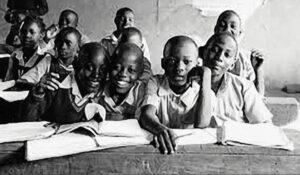
In Nigeria, the term “Western education” is often used to describe formal schooling introduced during the colonial era. This has led to a widespread belief that education itself is a Western invention or property. In reality, education is a universal human activity, and what is labeled “Western education” is simply one organized system among many.
Education as a Universal Human Practice
Before colonial contact, Nigerian societies already had well-developed systems of learning. Knowledge was passed through apprenticeships, storytelling, community training, and hands-on practice. These systems covered areas such as:
- Farming and animal rearing
- Traditional medicine and healing practices
- Governance and civic responsibilities
- Trades, crafts, and vocational skills
This shows that education has always existed in different forms across cultures—it is not exclusive to any region.
What “Western Education” Really Refers To
The phrase generally describes the formal schooling model that developed in Europe and later spread globally. It is characterized by:
- Structured classrooms and timetables
- Written curricula and standardized examinations
- Formal qualifications and certification
- Subject-based academic learning
Today, this system is no longer limited to the West. It has been adopted and adapted worldwide, including in Nigeria.
Why the Misunderstanding Persists
Several reasons explain why education is often seen as “Western-owned”:
Colonial history
Formal schooling was introduced during colonial rule, which created the impression that it originated externally.
Language influence
The use of English in schools reinforces the idea of foreign ownership.
Curriculum structure
Many educational systems still follow global academic models developed outside Africa.
Perception of superiority
Formal schooling is often viewed as more advanced than indigenous learning systems.
The Modern Reality
Today, education is a global system shaped by many cultures. Countries continuously modify their school systems to suit local needs. In Nigeria, education now includes a mix of:
- Indigenous knowledge and cultural teachings
- Science, technology, and global academic standards
- Technical and vocational training
This shows that education is not owned by any one civilization but is a shared and evolving human institution.
The Importance of Both Systems
Rather than viewing them as competing models, indigenous and formal education can complement each other:
- Traditional systems preserve cultural identity and practical skills
- Formal education provides global recognition and structured learning pathways
Together, they offer a more balanced form of knowledge.
Conclusion
Education is not the property of the West. What is commonly called “Western education” is simply one historical model that has become globally adopted. Recognizing this helps correct misconceptions and encourages a broader appreciation of both indigenous and formal learning systems.