Education as a Right, Not a Privilege: Nigeria’s Government
Education as a Right, Not a Privilege: Nigeria’s Government

Education is universally acknowledged as a crucial gateway to opportunity, empowerment, and societal progress. In Nigeria, the government asserts that quality education should be considered a fundamental human right, not an exclusive privilege. This position has gained significant traction as the country continues to confront various challenges within its education system.
Defining the Right to Education
The concept of education as a basic human right is supported by both global and national standards. The United Nations’ Universal Declaration of Human Rights (UDHR), adopted in 1948, acknowledges education as a fundamental right. Article 26 specifically states that everyone is entitled to education, which should be accessible and geared towards human development. Similarly, Nigeria’s constitution enshrines the right to education, emphasizing that every Nigerian child should have access to it.
For the Nigerian government, this right is more than a theoretical principle; it is a concrete commitment. This is reflected in national policies like the Universal Basic Education (UBE) Act of 2004, which ensures free education for children from primary through junior secondary school.
The State of Education in Nigeria
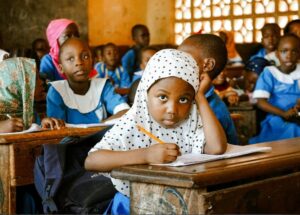
While Nigeria has made strides in ensuring educational access, significant barriers still persist. Rapid population growth, urbanization, and deep inequalities between rural and urban regions have overwhelmed the education system. According to UNICEF, millions of Nigerian children remain out of school, particularly in northern areas where factors such as poverty, cultural norms, and insecurity prevent many children, especially girls, from attending school.
Educational infrastructure is often inadequate, with many schools lacking basic resources such as textbooks and proper facilities. In addition, classrooms tend to be overcrowded, and teachers frequently lack the training or support they need. Although the government has worked to address these challenges, a considerable gap remains between its policies and the lived realities of students.
Government Initiatives to Improve Education
In response to these challenges, the Nigerian government has launched several initiatives to enhance both access to and the quality of education. Programs like the National Home Grown School Feeding Program aim to encourage school attendance by providing nutritious meals to children in primary schools. Additionally, the Better Education Service Delivery for All (BESDA) program seeks to enroll out of school children, addressing the root causes of their exclusion.
The government has also encouraged private sector involvement in education, alongside public sector reforms. Significant investments have been made to build new schools, renovate existing ones, and train teachers to improve educational outcomes.
Furthermore, the rise of e-learning, particularly during the COVID-19 pandemic, has prompted the government to explore digital technologies as a means to address education gaps, especially in remote areas.
Challenges to Effective Implementation
Despite these efforts, several obstacles hinder the realization of education as a right for all Nigerians. Corruption, limited funding, and political instability remain significant challenges. Education’s share of the national budget is often insufficient, falling far short of the 26% recommendation by UNESCO.
The security situation in northern Nigeria, with ongoing insurgencies like Boko Haram, has exacerbated the problem. Many schools have been forced to close, and students, particularly girls, have been kidnapped, further undermining educational access.
Additionally, inadequate funding and poor management of existing educational resources have led to dilapidated schools and a shortage of teaching materials, making it difficult for teachers to deliver quality instruction.
The Role of Policy and Advocacy
For education to truly be seen as a right, a sustained commitment from all levels of government is required. The Nigerian government must prioritize education funding and ensure that allocated resources are efficiently used. There is also a need for increased accountability in the implementation of educational policies. Collaboration with the private sector and community based organizations can help strengthen these efforts.
Advocacy groups continue to campaign for reforms that would make quality education accessible to all, regardless of socioeconomic status, geographic location, or gender. These organizations emphasize the need for education that is not only free but also inclusive, high-quality, and geared towards lifelong learning.
Education for All
The Nigerian government’s stance that education should be a right and not a privilege reflects a growing recognition of education’s transformative power. While challenges remain, the government’s initiatives signal a dedication to overcoming these obstacles. Education is more than just the acquisition of knowledge it is about creating opportunities, breaking the cycle of poverty, and equipping individuals to shape their futures. For Nigeria to achieve its vision of a more educated and empowered society, it must continue its efforts to ensure every child has access to the education they deserve, regardless of their background or circumstances.
By viewing education as a right, Nigeria can lay the foundation for a more just and equitable society, where all citizens have the opportunity to succeed and contribute to national development.